
Evaporative cooling systems increase output at Kalaeloa
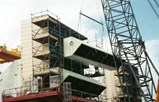
Kalaeloa cogeneration plant (KCP)—a combined-cycle combustion turbine facility in Kapolei, HI—converts chemical energy from fuel into electrical and heat energy and sells the resulting electricity and steam. KCP generates about 20% of the electricity needs for the island of Oahu.
As a partnership between ABB Energy Ventures and Kalaeloa Investment Partners (KIP), the cogeneration plant provides a portion of the steam needs for Tesoro Hawaii Corporation, one of the two oil refineries in the state of Hawaii. It also provides 180 MW of firm capacity to Hawaiian Electric Company, Inc. (HECO).
In 1997, Kalaeloa Partners decided to examine the power plant's systems to determine what capital upgrades could be implemented to increase plant output and efficiency. They found that an evaporative cooling system was one such upgrade that could do just that.
A close look at the system design
The combined cycle plant design includes two ABB 74.6 MW type 11N gas turbines, one ABB 51.5 MW extraction/condensing steam turbine and two Deltak heat recovery steam generators (HRSG), plus a balance of equipment that completes the combined cycle.

While low sulfur fuel oil is the primary fuel, the plant uses No. 2 diesel fuel as a backup source and for short-duration startup and shutdown of the gas turbines. Propane ignites the turbines.
As part of the conversion process, air enters the compressor of the gas turbine via the air intake. After the air is compressed, it enters the combustor to be mixed with fuel and then burned. As the fuel burns, chemical energy from the fuel changes to heat (or thermal energy) in the form of hot gas. The hot gas then enters the turbine where some of the thermal energy of the gas converts into mechanical energy to drive the compressor as well as the generator via a common rotor shaft.
About two-thirds of this mechanical energy drives the compressor, and the remaining energy drives the generator, where the mechanical energy converts to the electricity sold to HECO.
The exhaust gas of the turbine contains a significant amount of remaining thermal energy, which passes through the heat recovery steam generator's to produce steam. This steam comes from two pressure levels and moves downstream via the high- and low-pressure steam headers.
From there, the steam moves to the steam turbine, where the steam's thermal energy converts into mechanical energy to turn a rotor shaft connected to a generator, completing the combined cycle. During normal operation, all the steam enters the steam turbine, and the system extracts the steam required by the adjacent Tesoro refinery, thus maximizing plant efficiency.
Alternately, the steam can bypass the steam turbine and move directly to the main condenser, or it can move to the process steam lines going to Tesoro Hawaii Corp.
The process requires large amounts of air to operate its gas turbines. Because of this, the power output and fuel consumption of a gas turbine depends upon mass flow, quality and ambient temperature of the air drawn into the combustion chamber.
"The cleaner and cooler the air taken into the turbine is, the more efficient the turbines operate, resulting in a higher power output," said Randy Koncelik, project engineer at the Kalaeloa cogeneration plant. "Conversely, as the air inlet temperature rises, power output falls and efficiency decreases."
According to Koncelik, Kalaeloa Partners knew it could recover lost power by cooling intake air before it entered the gas turbine. And that's when Kalaeloa contacted a few evaporative cooling manufacturers, including Fort Myers, FL-based Munters Systems Division.
"We chose an evaporative system over the other types of cooling systems such as fogging and air chillers because of simplicity, reliability and cost," Koncelik said. "The fogging systems did not appear to have the track record of producing the reliable cooling effect we were looking for, and the air chillers are very costly to install and operate."
After careful analysis, Kalaeloa Partners decided to retrofit each of the 11N gas turbines with TURBIdek, a stand-alone evaporative cooling system designed and developed by Munters to increase output levels and improve thermal efficiency.
How evaporative cooling works
In evaporative cooling, intake air passes through one or more wet pads to simultaneously absorb humidity and cool the air. The cool, humid air then goes to the area where it's needed. The TURBIdek system cools the inlet air, creating denser air and giving gas turbines a higher mass flow rate and pressure ratio, resulting in an increase in power output and efficiency.
"By significantly densifying the air, Munters TURBIdek evaporative cooling system optimizes the gas turbine combustion process by increasing oxygen levels," said Larry Klekar, sales manager for Munters Systems Division. "Concurrently, the air scrubbing effects of Munters' GLASdek evaporative cooling media removes many airborne contaminants and particulates before they enter the turbine. This decreases the maintenance required on filters and other equipment, reducing operating costs. It also extends the life of gas turbines which saves on capital expenditures."
According to Koncelik, Kalaeloa projected a 2.1 MW-increase on each combustion turbine (CT), for a total plant output increase of 4.2 MW.
"Actual power increases have been higher than anticipated—closer to a 5 MW total increase," Koncelik said. "In addition to increasing the CT output, we've seen almost a full MW increase on the steam turbine as well. That's because the heat energy in the exhaust gas has increased allowing the HRSG to produce more steam for the combined cycle to take advantage of."
Other major benefits of Kalaeloa's evaporative cooling system include a reduced pressure drop in the inlet of the gas turbine filter house.
"We originally had in place an inertial separator filter (ISF), which cleaned the incoming air of large particles as the first stage of filtration," Koncelik said. "The design of the Munters system calls for the ISF to be removed and the evaporative cooler to take its place. This reduces the pressure drop on the air inlet side from 1.3 inches of water to .3 inches of water. The air encounters less pressure drop on the way into the CT compressor, improving mass flow and yielding higher efficiency and power output."
According to Koncelik, the company has found the TURBIdek system to be low maintenance. "The old ISF system has six 40-horsepower (HP) motors, which had to be maintained routinely, as all six ran continuously," Koncelik said. "The Munters system has only one 10-HP motor running at a time, so less overall maintenance is expected over the life of the equipment."
Plant operators must ensure that the water feed headers are continuously delivering water of proper quality and that the media is wetted evenly. In service since 1998, he said the system's media remains in good condition, with a five- to seven-year life expectancy given the water conditions at the site.
According to Klekar, recovered turbine outputs of 15% have been reported when using evaporative cooling to cool inlet air where relative humidity is at its lowest and energy is in peak demand.
"With Munters' TURBIdek System and an ambient wet bulb temperature of 60ºF, it's possible to recover as much as 15% of the lost power just by cooling the intake air," Klekar said.
And that recovered power can generate significant revenue over time for a gas turbine operation.
For more information about this particular project or the TURBIdek System, contact Ben Arens, at 312-644-4409 or bena@dgpr.com.
Edited by April C. Murelio, Managing Editor, Power Online
Subscribe to our free e-mail newsletter.
Click for a free Buyer's Guide listing.